Advice & guides.
Repair or replace a Canton sewer line.
A failing sewer line is one of the bigger plumbing decisions a homeowner faces. Here is how the repair-versus-replace call actually gets made.
The stakes.
One pipe, and a wide range of fixes.
The sewer line is the pipe that carries everything from the house to the public main or the septic tank, and when it fails there is no ignoring it. The hard part is that the fix ranges from a modest spot repair to replacing the whole run, and the difference in cost is large. Knowing how that decision gets made helps a homeowner ask the right questions instead of taking the first number offered.
In Canton, two local factors put these lines under strain, and understanding them explains both why the line failed and what the honest options are.
Why Canton lines fail.
Red clay, old pipe, and roots at the joints.
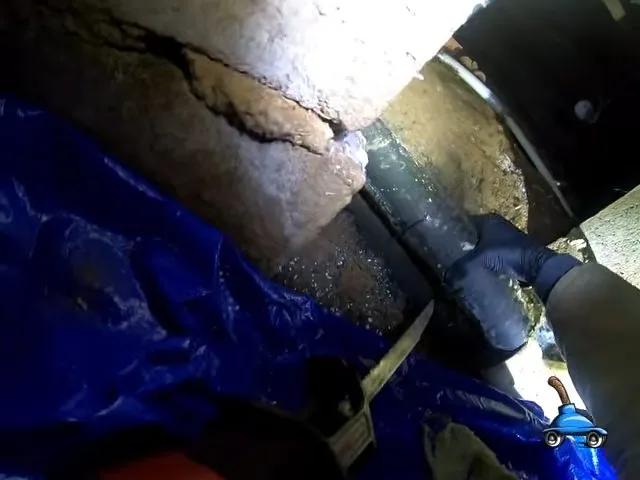
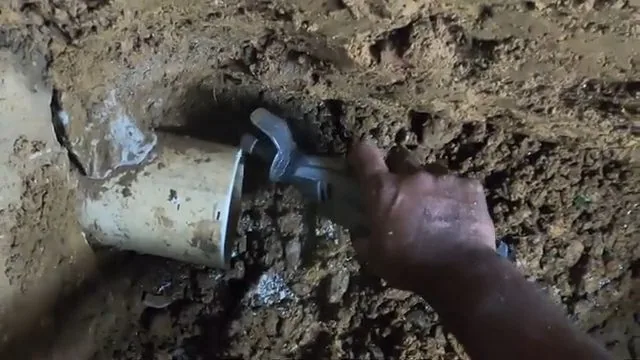
The first factor is the soil. Canton's red clay swells when wet and shrinks when dry, and that seasonal movement slowly works pipe joints loose over the years until roots find the gap. The second is age: in the older neighborhoods near downtown and the mill district, sewer laterals may be original clay or cast iron, materials that were never meant to last a century and that crack and corrode as they age.
Roots are the usual accomplice. Once a joint opens even slightly, tree roots follow the moisture in and expand, and a camera inspection of Canton lines frequently finds root intrusion at exactly the joints the clay has flexed. That is why the first step in any repair-versus-replace decision is always to see inside the pipe.
Reading the footage.
What points to a spot repair, and what points to replacement.
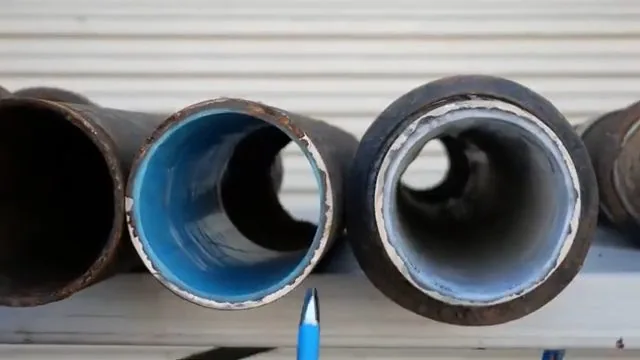
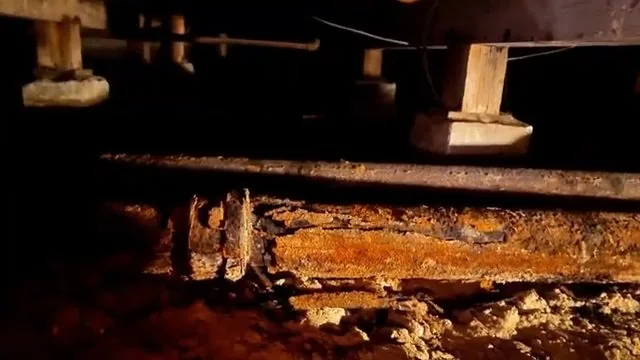
What the camera finds usually points clearly toward repair or replacement. A single break or a root intrusion at one accessible joint is a candidate for a spot repair: clear the line, often with hydro jetting to remove the roots, and fix or replace that section. When the damage is localized and the rest of the pipe is sound, there is no reason to replace the whole run.
Replacement moves to the front when the footage shows the pipe failing in several places, when the material itself is at the end of its life, or when a section has bellied or collapsed. Patching one joint on a line that is cracking everywhere just moves the next failure a few feet down. On an old clay or cast-iron lateral with multiple faults, full line replacement is often the honest answer even though it is the bigger job.
The decision.
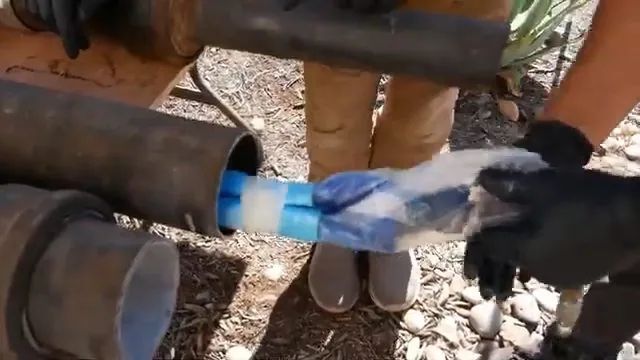
How the repair-versus-replace call gets made.
| Situation. | Usually points to. | Why. |
|---|---|---|
| One break or root at a single joint. | Spot repair. | The rest of the pipe is sound; fix the fault. |
| Repeated failures along the run. | Replacement. | Patching one spot just delays the next break. |
| Original clay or cast iron, aged. | Replacement. | The material is at the end of its service life. |
| Bellied or collapsed section. | Replacement. | A low or crushed pipe cannot be patched to work. |
| Mature trees or hardscape over the line. | Trenchless, if suitable. | Replaces the line without trenching the whole yard. |
Skip the guesswork -- talk to a local Canton plumber now.
Call (770) 764-0886Trenchless and permits.
Saving the yard, and why the permit protects you.
Where the yard is full of mature trees, a driveway, or landscaping, a trenchless approach is worth asking about. Trenchless methods replace or line the pipe without digging its whole length, which can save a yard from being torn up, though whether it suits a given line depends on the pipe's condition and layout. A good plumber will tell you honestly whether your line is a candidate rather than selling it as a cure-all.
Whatever the method, sewer replacement is permitted work in Cherokee County because it ties into the public system, and that is a protection, not red tape: it means the work is inspected and done to code. The right sequence is always the same, camera first, then a recommendation matched to what the footage shows, with the evidence in your hands before anyone reaches for a shovel.
The work itself.
What the job looks like, and keeping the next failure away.
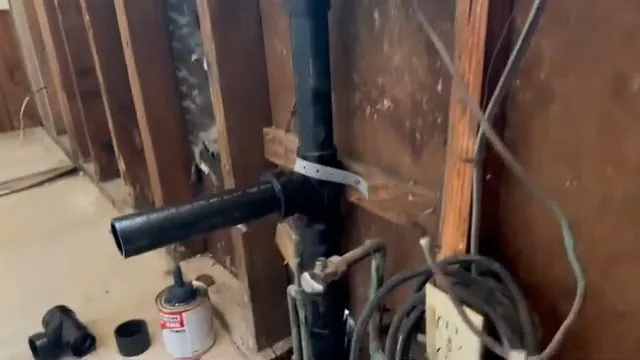
It helps to know what the work itself looks like, because the disruption is part of the decision. A spot repair on an accessible line is often a same-day job: locate, expose the fault, replace the section, backfill. A full replacement is larger, involving a trench along the line's path or, where suitable, a trenchless pull that needs only access pits at each end. Either way the yard recovers, but a homeowner deserves to know which they are signing up for before the crew arrives.
Preventing the next failure is worth a sentence too. Roots return through the same opening they found before, so where roots were the cause, the plan should address them, whether that means a repaired joint, a lined section, or simply knowing not to plant the wrong tree over the line. A follow-up camera check after the work confirms the fix and gives you a clean baseline to compare against if trouble ever returns. On a line that ties into the public system, that inspected, documented result is exactly what the Cherokee County permit is there to ensure.
Questions.
Related questions.
Not seeing your exact situation below? Call (770) 764-0886 and describe it. A licensed plumber will tell you what is likely going on.
How do I know if my sewer line needs repair or full replacement?
It comes down to what a camera inspection shows. A single break or root intrusion at one joint usually means a spot repair; failures in several places, aged clay or cast-iron pipe, or a collapsed section usually mean replacement. Seeing inside the line is what settles it.
Why do sewer lines fail in Canton?
Two local reasons: the red clay soil swells and shrinks with the seasons and works pipe joints loose, and older neighborhoods still have original clay or cast-iron laterals near the end of their life. Roots then follow the moisture into any opened joint.
What is trenchless sewer replacement?
It replaces or lines a sewer pipe without digging up its entire length, which can spare a yard full of trees or hardscape. Whether it suits a particular line depends on the pipe's condition and layout, so it is worth asking about but is not right for every situation.
Rather ask a plumber directly?
Describe your symptom on the phone and get a straight, local answer. Emergencies answered around the clock.
Prefer to talk it through first? Tap here to call (770) 764-0886.